- Screen Colours:
- Normal
- Black & Yellow
The Origin of the Poor's Estate
The Estate originated with a gift of farm land from villagers emigrating to Pennsylvania in 1666 to benefit the poor of Troston. A plaque commemorating the event is high on the North wall of the Church. Over time, other small packets of land around Troston were leased out and the yearly rent allocated to the churchwardens of Troston to distribute on Christmas day, among such poor people of Troston as they thought fit.
Finally, under an Inclosure Act passed in 1806, these packets were amalgamated into one field “an allotment of 14 acres awarded to the lord of the manor, the rector, churchwardens and overseers of the poor, to the intent that the rents & profits should be laid out in purchasing fuel, to be distributed among the poor inhabitants of the parish as the Trustees, or the major part of them should appoint, the overplus of that rent, if any, also to go for the benefit of the poor, as the trustees should think proper.” The Lord of the Manor at that time, Capel Lofft, added the gift of blankets.
Churchwardens were elected by the congregation every year - and after 6 years they had to take a 2 year break before becoming eligible again. The Overseers seemed to be reluctant appointees working under the supervision of the local JP. Their role was replaced in the Poor Law Amendment Act of 1834 with boards of guardians until the Local Government Act 1894, when the new Rural District Councils became the guardians for their area.
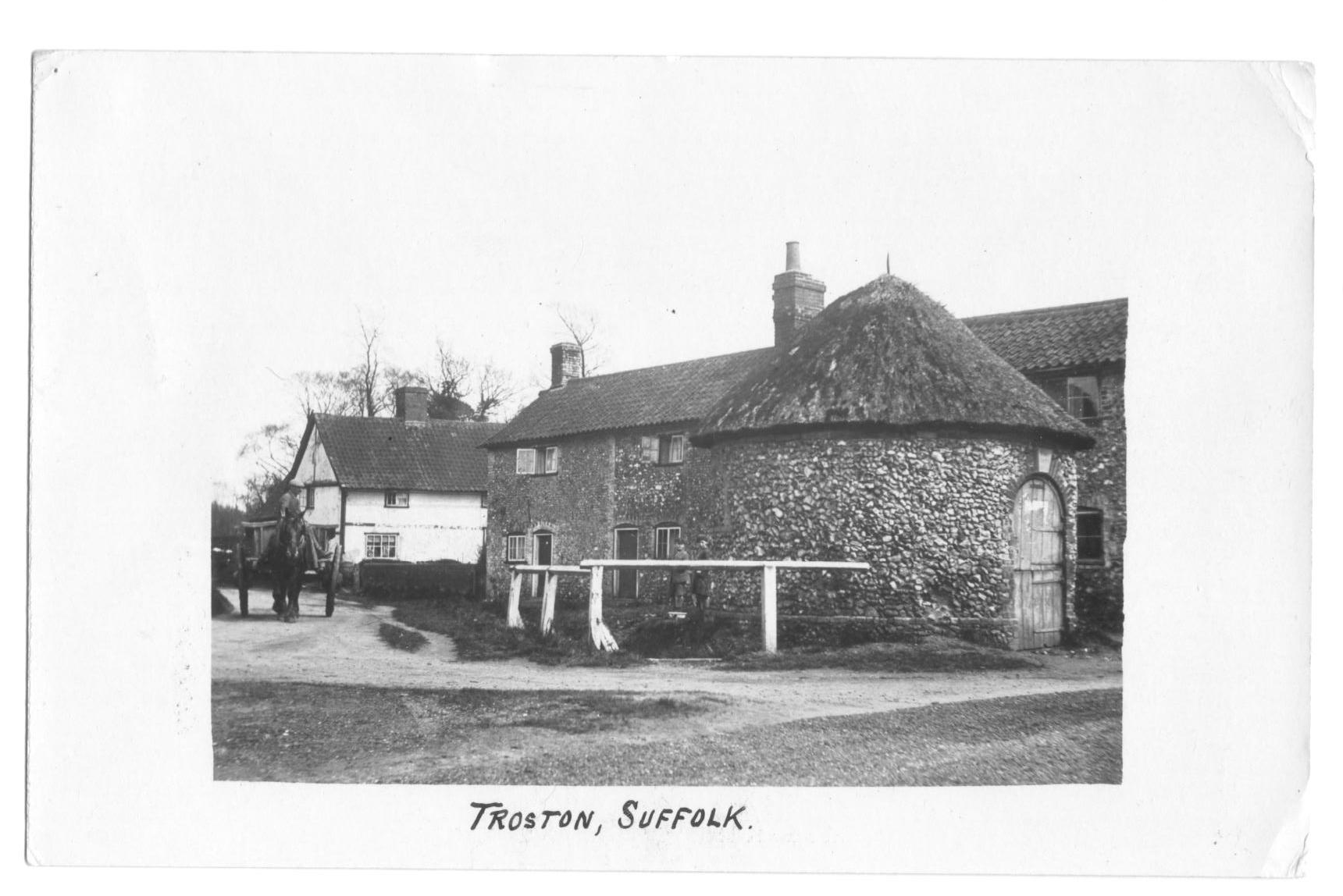
The coal and blankets were stored in a shed at the corner of Church Lane and the Ixworth Road, opposite the old Methodist Chapel.
The amount of coal and number of blankets received by needy villagers depended on the judgement of the Trustees and their view of the circumstances. More was given to large families, to any one who was ill or handicapped and to widows with children.
 For example, early recipients were known to be:
John Pope - infirm
Widow Coe & Sarah - deaf and dumb
James Greengrass with 6 children - family ill
Widow Polly and her idiot son James.
In 1816, Capel Lofft decides to exile himself from England and takes his family to Montcalieri in Italy. The land of the Poor’s Estate is leased to Mr W Hoy in 1822 and the rent used by the Trustees to purchase coal for poor families. There appears to be no records of their deliberations.
More Recent Times
The Poor’s Estate is formally registered as a charity 26th November 1962 - number 213197.
Again, there seems to be no records of any meetings of the Trustees, until the 13th October 1981 when the Rev. Oliver of Ixworth convened a meeting. It is believed until then the Lord of the Manor, Lawrence Bevan, until his death in 1972, and the Church Wardens had managed the charity. Twenty individuals were identified as meriting a payment - half receiving receipts for coal and half receiving cash.
No more meetings are recorded until a note in October 1984 stated the term of the elected Church Wardens had ended and the lease of the land to Troston Farms was coming to a close. Also that John Browning had become the Lord of the Manor and Deacon Sally Fogden would now represent the Church as ex-officio members.
In October 1986, a series of conversations are summarised to the effect:
• the lease with Troston Farms had been renewed after a competitive tender;
• the distribution criteria was to be a minimum of two years residence in the Parish as a householder, and being of at least State Pension Age;
• exceptional cases of hardship would be considered.
Very brief notes of annual meetings are recorded until October 2006 when Vic Simmonds is invited to be a Trustee and elected as Chairman, Treasurer and Secretary. The merit or not of selling the land becomes a regular agenda item. At a village meeting in 2010 over 50% of the audience were against the sale. A renewable tenancy was therefore offered to Troston Farms rather than selling the land. Herr Claas, the owner of Troston Farms, offers a generous rolling Farm Tenancy.
By 2014, it was thought by some that the criteria used by the Trustees for distributing funds had become outdated - when the criteria was set up perhaps there was a rough correlation between being old and being in need of financial help? It was noted that a similar charity in Ixworth had the criteria of living in the village for 2 years, having an income at the minimum wage level or facing unexpected hardship (evidence to be assessed by the Trustees).
The Poor’s Estate is notified in September 2015 that it is no longer a registered charity as its income was less than £5,000 and did not make tax returns - but it could continue to function as a charity to meet its original purpose of helping the poor of the Parish.
Today
The Trustees of the Estate are currently: John Browning as Lord of the Manor; the Rev.Tony Redman as the representative of the Church Parochial Council - and Dr Graeme Norris, Des Pugson and Peter Riddick who were nominated by the Parish Council.
The annual rent from Troston Farms is £1876. About twenty residents every year ask to be considered for a donation.
The definition of what households are “poor” in Troston, and deserving “fuel” money from the Estate, continues to be a topic of debate. In the past, there was probably a connection between being elderly and being in need of financial help. It can be argued that this is no longer the case - both young and old, regarded as living below a generally agreed minimum income, and probably receiving State benefits, might be more suitable candidates in the terms of the charity’s founding document?
Indeed, according to the Rowntree Trust, since 2011, average pensioner incomes have been growing at a similar rate to working-age incomes driven by higher state and private pension incomes. However, income growth for poor pensioners has lagged behind the population as a whole. This is in part because poor pensioners have not benefited from the rises in private pension income that pushed up incomes for people on middle incomes. Indeed, ironically, higher state pensions have made poorer pensioners increasingly ineligible for further means-tested state
support.
It was noted that not all villagers over 65 asked to be considered - and not all requesting a pay-out seemed to be existing on a low income. Also the State Pension age has risen to 66 years old for both men and women and will increase to 67 between 2026 and 2028. According to Government calculations, the poverty-line in 2024 was £14,250 per year and a low income to be below £29,500. The Minimum Income Floor used by the DWP to help make judgements on gauging support is based on the National Minimum Wage of £11.44 per hour - and
equates to about £21,000 a year before tax and benefits.
Discussion with similar charities in nearby villages and West Suffolk Council suggests that many use the retirement age criteria but some consider income levels. Ixworth for example use:
• Receiving an income (not including State benefits) below £24k per couple
• Having savings below £5,000 and,
• Not owning sizeable capital assets.
The Trustees agreed that the next Newsletter seeking claimants to be considered for a distribution should remind claimants of the purpose of the charity - and the view that a household income below £24,000 is considered poor. There was no appetite for starting some form of public “means testing” but to trust pensioners to think of folk whose families would benefit considerably from the small sums the charity can award. The Trustees would review the list of potential beneficiaries every year and the sum to distribute.
Proposed Criteria
The proposed criteria for distribution will be:
• Currently living in the Parish over the last two years;
• Being the head of the household;
• Receiving less than £24,000 income before tax and credits that year;
• Having savings below £5,000;
• Not owning sizeable capital assets; and
• Not being a Trustee!
——————————————-